Can We Still Hear Where We Come From?
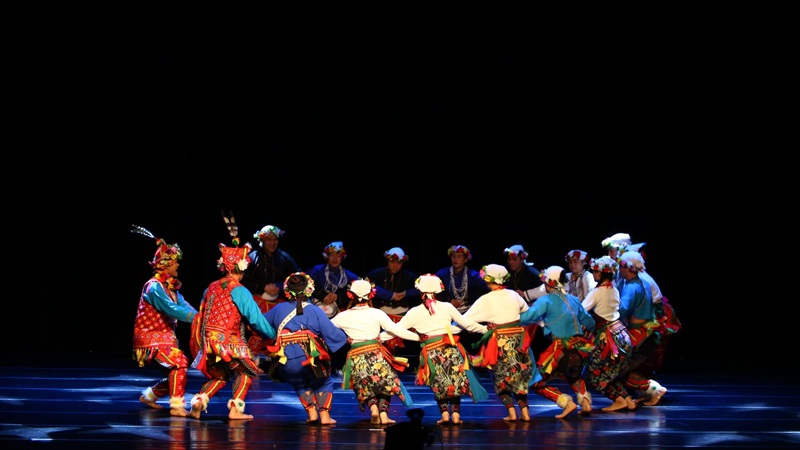
There was something quite moving about watching these young performers bring songs and dances from Taiwan’s Indigenous communities onto a Kuala Lumpur stage.
Not because the traditions were being presented as something distant or exotic.
But because, behind every song and movement, there was a story of people trying to remember.
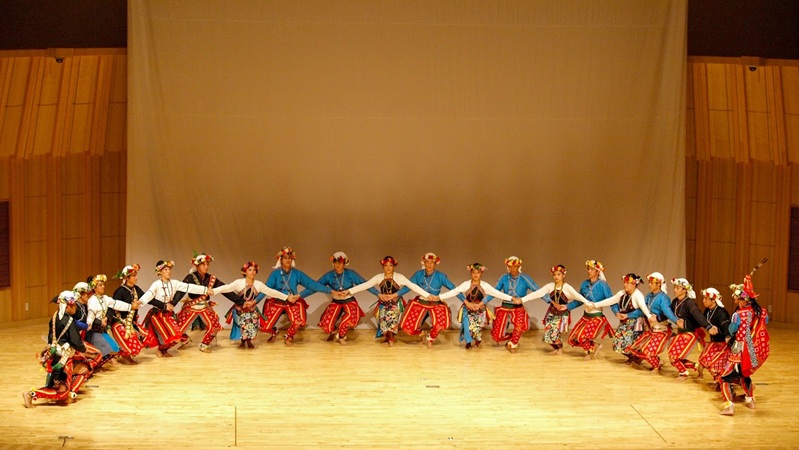
“When Spirits Meet”, the Malaysian premiere by Taiwan’s Formosa Indigenous Song & Dance Troupe (FISDT), brought together traditions from the Pinuyumayan and Pangcah communities.

For the audience, it was a performance.
For the performers, it carries something much more personal.
“Ancient voices, still deeply alive,” says Monica Tong, editor-in-chief of Music Press Asia.
These are not simply songs and dances
That is perhaps the easiest thing to miss when watching traditional music on a modern stage.
A song can sound beautiful. A dance can be exciting. The costumes can immediately catch the eye.
But behind them are communities, families, land, history and generations of knowledge.
For the Pinuyumayan, the songs and dances presented in the first half of the performance are connected to celebrations, agriculture, the arrival of a new season and the transition of young people into new stages of life.
The Pangcah traditions that follow carry their own stories, including ancestral origins and migration, gratitude towards elders, cooperation and the responsibilities of different age groups. Their music includes the rich polyphonic singing for which the community is known.

The more you learn about the traditions, the harder it becomes to see them simply as choreography.
They are part of how a community remembers itself.
And that makes the work of FISDT particularly interesting.
Young people choosing to remember
FISDT has been doing this work for 35 years.
Its performers work with tribal elders and anthropologists, taking part in field research and traditional rituals to document and reconstruct songs and dances that have been gradually disappearing. Some of the young performers began participating in FISDT activities while still in high school. Others have developed specialist skills in areas such as traditional clothing and Indigenous music.
There is something quite striking about that.
At a time when young people everywhere are surrounded by new technology, global music and rapidly changing lifestyles, these young performers are spending their time learning songs that have travelled through generations.
They are learning from people who remember.
And then they are taking that knowledge onto a stage.
“A rare glimpse of living heritage,” says Monica Tong, editor-in-chief of Music Press Asia.
It is easy to talk about cultural preservation as though it is the responsibility of museums, governments or cultural institutions.
But ultimately, culture has to live somewhere.
It has to live in people.
And eventually, those people have to decide whether they want to carry it forward.
Sometimes, moving forward means going home
There is another part of FISDT’s story that deserves attention.
The troupe spent its first 15 years in Taipei. In 2007, it moved to Hualien County, where Indigenous communities are concentrated, as part of a deliberate return to its ancestral roots. The move became a new chapter in its artistic development, with the performers immersing themselves more deeply in tribal life.
That is an unusual kind of artistic journey.
Most creative organisations are encouraged to move towards bigger cities, larger audiences and greater international visibility.
FISDT found part of its artistic direction by moving closer to home.
There is a lesson in that which reaches far beyond Taiwan.
Sometimes the things we are looking for creatively are not somewhere ahead of us.
They are behind us.
A personal journey back to identity
The story of artistic director Fiadaw Fagod makes this even more human.
Born in Taitung and raised in an Amis community, he did not take part in traditional ceremonies during his youth. He left his community at 13, later served in the military and worked various jobs.
Then, in 1991, he became part of the group that established FISDT.
Over the following 35 years, his work with the troupe became a way of reconnecting with his traditional culture and Indigenous identity.
That is not the neat cultural story we sometimes expect.
Heritage is not always something we understand when we are young.
Sometimes we grow away from it. Sometimes we come back.
And sometimes, when we come back, we see it differently.
And this is where Taiwan’s story becomes Asia’s story
What makes “When Spirits Meet” worth looking beyond the performance itself is that Taiwan is not alone in facing this question.
Across Asia, traditional music and cultural practices are having to find their place in modern life.
Young people move to cities. Communities change. Languages become less widely spoken. Technology changes how we listen to music. Global culture arrives faster than ever.
So the question is not simply how to preserve traditional music.
It is how to keep it alive.
There is a difference.
Preserving something can mean keeping it safe.
Keeping something alive means allowing people to continue using it, learning it, performing it and finding meaning in it.
That is what makes the young people of FISDT so important to this story.
They are not simply performing something that belongs to the past.
They are helping decide what will belong to the future.
What happens when the music travels?
Bringing FISDT to Kuala Lumpur also creates another kind of exchange.
Malaysia has its own rich collection of traditional musical cultures, languages, rituals and community practices. So an audience watching Taiwanese Indigenous performers may find themselves thinking about traditions much closer to home.
What happens to our own songs when the people who grew up with them become fewer?
Who teaches the next generation?
Can a tradition change without losing what makes it itself?
And can young people find something exciting in music that existed long before the digital world they grew up in?
These are not questions that belong only to Taiwan.
They belong to Malaysia.
And to Thailand, Indonesia, the Philippines, Japan, Korea and so many other parts of Asia where cultural traditions are negotiating their place in a changing world.
Perhaps that is what made this meeting in Kuala Lumpur meaningful.
Taiwan brought its songs to Malaysia.
But somewhere between the stage and the audience, the conversation became much bigger than Taiwan.
It became a conversation about memory.
About identity.
About young people.
And about what we choose to carry with us when the world around us keeps changing.
Because in the end, a culture does not survive simply because we remember that it existed.
It survives when someone young decides that it is worth learning the song.
And then sings it again.