Eurovision Song Contest Asia 2026: What Can Asia Learn?
Music Press Asia | Editorial Series: Eurovision Asia and the Future of Asian Music
Music Press Asia | Editorial Series: Eurovision Asia and the Future of Asian Music
Music competitions are often built around a deceptively simple idea: bring people together through music.
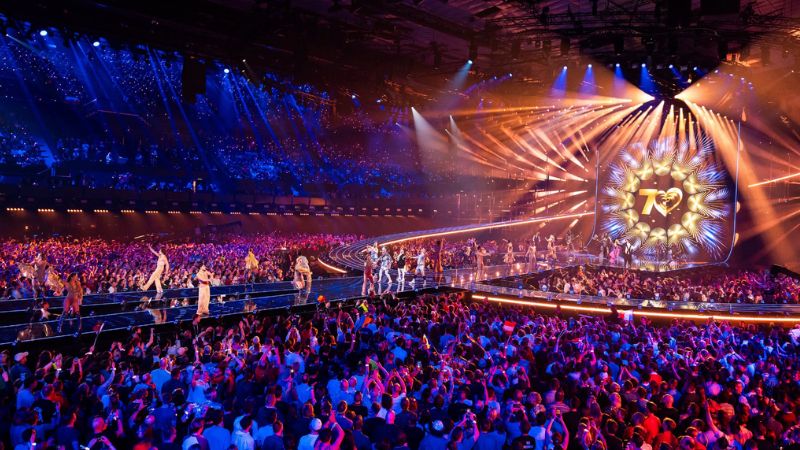
For 70 years, the Eurovision Song Contest has attempted exactly that. Born in post-war Europe, it developed into one of the world’s largest televised music events, built around the idea that countries with different languages, histories and identities could share one stage.
But Eurovision 2026 offered a difficult reminder of the limits of that ideal.
The contest in Vienna went ahead with Israel participating amid the continuing war in Gaza. Five countries, Spain, Ireland, Iceland, the Netherlands and Slovenia, withdrew over Israel’s participation. The contest consequently had 35 participating countries, while Israel finished second and Bulgaria’s DARA won with Bangaranga.

This is not a story about whether Eurovision should be considered a political event, nor is it an attempt to diminish the devastating human consequences of the war in Gaza. Those consequences exist far beyond a television stage.
Rather, Eurovision 2026 raises a question that matters increasingly to Asia:
What happens when a cultural institution designed to bring people together encounters a world in which people and governments profoundly disagree?
The answer may matter more than the winner.
A music competition cannot exist outside the world
It is tempting to say that music should stay out of politics.
But artists do not exist outside society, and broadcasters do not operate outside governments, audiences, national identities and international events. A cultural institution can provide a space for people to meet, but it cannot make the world around that space disappear.

The lesson from Eurovision 2026 is therefore not that music has failed to unite people.
It is that music cannot suspend reality simply because the cameras have started rolling.
The European Broadcasting Union has already begun responding to this reality. For Eurovision 2027, new rules will prevent a broadcaster from hosting the contest if its country is involved in an armed conflict or sensitive geopolitical situation, following concerns raised after the 2026 edition.
That development offers an important lesson for Asia before its own competition has even begun.
Ten lessons for Asia
- Build the rules before the crisis
This may be the most important lesson of all.
A multinational music competition should not wait until a war, diplomatic crisis or boycott occurs before deciding what its principles are.
Asia should establish clear rules in advance covering armed conflict, political campaigning, broadcaster conduct, artist safety, voting manipulation, government interference and participation.
The credibility of a competition is determined not only by the rules it has, but by whether those rules were established before they became politically convenient.
- Represent a country without becoming its government
An artist representing Malaysia, India, Thailand or Korea is representing a cultural community on a stage. That does not automatically mean the artist speaks for every policy of that country’s government.
This distinction will become increasingly important as Eurovision Asia expands.
National representation should not automatically become political endorsement.
- Do not pretend controversy will disappear
Asia contains enormous political, religious, ethnic and historical differences.
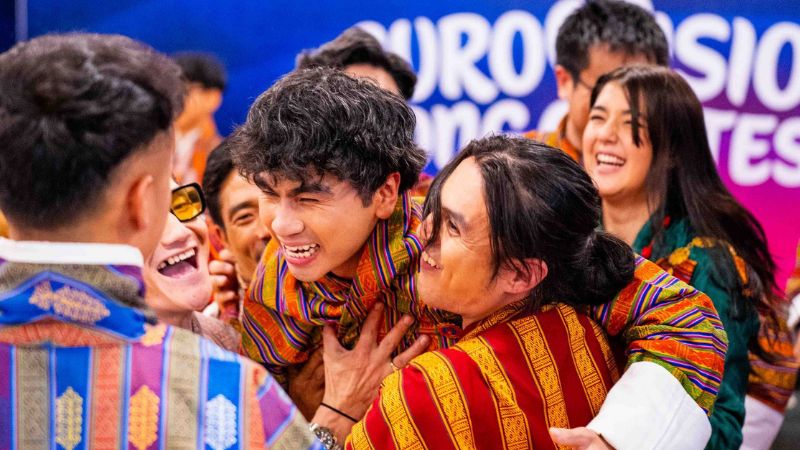
China and India alone would introduce new dimensions to the conversation if they eventually joined the competition. Neither is among the 10 confirmed inaugural participants, so their future involvement should be treated as a possibility rather than an assumption. The current confirmed lineup consists of Bangladesh, Bhutan, Cambodia, Laos, Malaysia, Nepal, the Philippines, South Korea, Thailand and Vietnam.
The objective should not be to create a competition without disagreement.
The objective should be to create an institution capable of handling disagreement responsibly.
- Protect the integrity of the vote
Eurovision demonstrates how quickly voting can become part of the political story.
For Asia, this challenge could be even greater. Massive online fan communities, national pride and the enormous populations of countries such as India, Indonesia and China could turn a music competition into a contest of mobilisation.
Voting rules therefore need to protect artistic judgement while recognising the realities of digital fandom.
The question is not simply, “Who has the biggest fan base?”
It is also:
How do we ensure that the best music has a meaningful chance to be heard?
- Put artists before geopolitics
Behind every national flag is an individual artist.
A competition can acknowledge political realities while still protecting performers from becoming convenient symbols in arguments they did not create.
That means providing clear standards for artist safety, harassment, political pressure and online abuse.
The stage should be a place where artists can perform, not a battlefield onto which they are unwillingly drafted.
- Let ASEAN demonstrate what regional diversity can look like
This is where Asia has an advantage.
Southeast Asia already contains extraordinary musical diversity within a relatively interconnected region. Malaysia, Thailand, Indonesia, Singapore, the Philippines, Vietnam, Cambodia, Laos and Brunei have developed distinct musical cultures while sharing centuries of cultural exchange.
Eurovision Asia’s inaugural lineup already brings together Southeast Asian countries with South Korea, Nepal, Bhutan and Bangladesh.
That gives the competition an opportunity to demonstrate something important:
Regional identity does not require cultural uniformity.
- Make discovery as important as competition
The most valuable outcome may not be the winner.
Imagine a Malaysian teenager discovering a Cambodian singer, a Thai producer finding a Vietnamese collaborator, or an audience in Korea discovering a Nepali folk tradition.
That kind of cultural discovery can continue long after the trophy has been awarded.

A successful Asian competition should therefore create pathways for artists to tour, collaborate, record and reach audiences outside their home markets.
- Build a creative economy, not simply a television show
Eurovision Asia has the potential to become much more than one spectacular night in Bangkok.
The ecosystem surrounding a major music competition can involve:
artists → songwriters → producers → choreographers → designers → broadcasters → streaming platforms → tourism → festivals → sponsors → audiences
The organisers have positioned Eurovision Asia as a major regional event with a potential audience of more than 600 million people.
For Asia’s creative industries, that scale could become significant.
- Measure cultural impact, not only ratings
Television audiences and streaming figures will inevitably become part of the conversation.
But they should not be the only measures of success.
What if Eurovision Asia could also demonstrate:
- new cross-border collaborations
- increased visibility for smaller music markets
- international touring opportunities
- new songwriting partnerships
- greater appreciation of regional musical traditions
- young audiences discovering music beyond their own language
Those are less spectacular numbers, but potentially more meaningful ones.
- Unity does not mean agreement
This may ultimately be the most important philosophical lesson.
Music cannot unite Asia politically.
It cannot resolve territorial disputes, wars, ideological disagreements or historical grievances.

It can, however, provide opportunities for people to encounter one another without first requiring them to agree.
Unity does not have to mean agreement.
Perhaps it simply means being willing to share the same room, listen to another voice and recognise that the person on the other side of the stage is a human being before they are a national identity.
Bangkok becomes the next test
On 14 November 2026, Bangkok will host the inaugural Eurovision Song Contest Asia.
Ten broadcasters are currently confirmed, including Malaysia’s Media Prima, alongside broadcasters from Thailand, South Korea, the Philippines, Vietnam, Cambodia, Laos, Bangladesh, Bhutan and Nepal. More countries may join as the competition develops.
It has a potential audience of 600+ million people across the region.
This makes Eurovision Asia more than an imported television format.
It is an experiment in regional cultural cooperation.
And it arrives at an unusually revealing moment.
Europe has just experienced one of the most politically difficult Eurovision contests in its history. Five countries withdrew over Israel’s participation, while the EBU has subsequently changed its rules for future editions.
Asia therefore has something Europe did not have when Eurovision began in 1956:
the opportunity to observe seventy years of experience before designing its own future.
That opportunity should not be wasted.
A new Music Press Asia series
Music Press Asia will follow Eurovision Song Contest Asia as more than an entertainment story.
We will look at the artists, national selections, music industries, cultural identities, audiences and creative opportunities emerging around the competition.
Because the bigger question is not simply:
Who will win Eurovision Asia?
It is:
What kind of Asian music community could emerge if artists from across the region are given a reason to listen to one another?
The answer will not be decided in one night in Bangkok.
It will be built, contested and perhaps occasionally complicated, one song at a time.
Thailand Partners
S20 Productions is a Thailand-based live entertainment and production company known for delivering large-scale events and premium experiences across Asia. As a production partner for Eurovision Song Contest Asia, S20 will support the delivery of world-class live experiences in Bangkok.
ZOOP is a next-generation social platform designed to connect creators, fans and communities through interactive digital experiences. Built on Hedera technology, ZOOP delivers secure, transparent and scalable infrastructure for digital engagement, bringing audiences closer to the action than ever before.
The confirmed participating broadcasters are:
Thailand — Channel 3
South Korea — ENA produced by PK Inc.
Malaysia — Media Prima (TV3)
Philippines — ABS-CBN
Vietnam — Vietnam Television (VTV3)
Cambodia — TV5 Cambodia
Laos — Vientiane Capital Television (VTE9)
Bangladesh — NTV
Bhutan — Bhutan Broadcasting Service (BBS)
Nepal — Himalaya TV
Additional countries and broadcasters are expected to be announced in the coming weeks as the line-up continues to expand.
Source: EBU