Music Collaboration in Asia: Finding Your Sound Beyond the Stage
Hyundai Motor Group, KIRARA bring technology to life through music with ‘Temper’
Hyundai Motor Group, KIRARA bring technology to life through music with ‘Temper’
What happens when a musician is asked to take an idea from outside the music industry and turn it into sound?
Artists and corporations have collaborated for decades. The interesting question is not whether a company can work with a musician, but what happens when the artist is given room to interpret rather than simply promote?
A recent collaboration between Hyundai Motor Group and Korean electronic musician KIRARA offers one example.
Their project, Temper, translates Hyundai’s manufacturing and technological development into electronic music. Inspired by the Korean concept Jeongryeon (정련), referring to the refinement of materials by removing impurities, the track follows an idea of transformation from raw material to finished vehicle. KIRARA uses electronic textures, glitch and breakbeat elements to interpret that process through her own musical language.
The corporation provides the subject.
The artist provides the connection.
What Do You Bring to the Room?
For musicians beginning their careers, this is perhaps the more important question.
You do not need a major audience or a long list of credits before you can collaborate. But you do need something to bring into the room.

It might be production skills, instrumental ability, songwriting, sound design, traditional musical knowledge, live performance or simply an unusual way of hearing things.
Identity tells people who you are. Musicianship gives you the ability to do something with it.
A collaboration should not replace musicianship. It can reveal it.
When an unfamiliar brief arrives, the musician has to decide what to hear in the idea, what to leave out and how to turn something abstract into music. Those decisions require judgement, curiosity and craft.
Finding Your Sound in Asia
This question becomes particularly interesting in Asia.
There is no single Asian musical identity. The region is a vast collection of languages, traditions, histories and contemporary scenes. A young musician might grow up listening to local music alongside K-pop, J-pop, hip-hop, electronic music, classical music and sounds from across the world.
That diversity can make identity complicated.
It can also be an advantage.
The question is not necessarily, “How do I sound completely different from everyone else?”
It may be:
“What do I consistently hear, notice and make that another musician might not?”
Your cultural surroundings, musical influences and personal experiences can become part of your creative vocabulary rather than something you need to hide in order to become internationally relevant.
Collaboration Does Not Mean Losing Yourself
There is a fear that working with corporations means compromising artistic identity.
It can, if the artist is simply told what to make.
But a strong collaboration can do the opposite. An unfamiliar brief can reveal what parts of your musical identity are essential and which are simply habits.
The goal is not to protect your identity from outside influence. It is to know your identity well enough to enter another world without losing yourself.
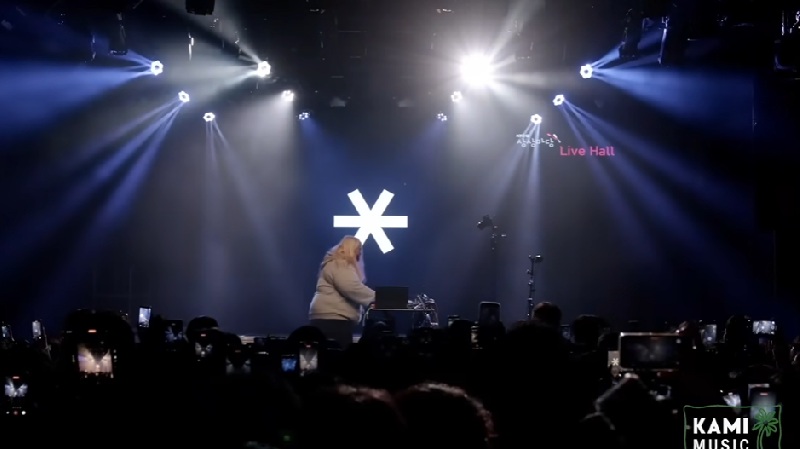
That is where KIRARA’s collaboration becomes useful as an example.
Earlier in 2026, she won Best Electronic Album at the 23rd Korean Music Awards for her self-titled fifth album, KIRARA. The recognition came from an established body of work and a distinctive musical identity, not from the corporate collaboration itself.
The Hyundai project therefore places an already-developed artistic voice inside a completely different context.
That is what makes collaboration interesting.
Your Sound, Their World
For emerging musicians, opportunities may come from places that do not initially look like music opportunities at all.
Technology. Film. Gaming. Fashion. Architecture. Automotive design. Exhibitions. Tourism.
A company may understand its technology exceptionally well.
An artist may understand how to make people feel something about it.
That is the space where collaboration becomes valuable.
You may not yet know exactly what your sound is. You may still be experimenting, building an audience or figuring out where your music belongs.
Keep developing the musicianship.
Stay curious about where you come from and what surrounds you.
Learn to communicate your ideas.
Then, when an unexpected creative opportunity arrives, you have something of your own to bring.
You do not need to become someone else’s voice.
You need to develop your own voice well enough to enter someone else’s world.
Listen to KIRARA’s Temper, here
Source: Hyundai Motor Group