Aubrey Suwito LIVE with National Symphony Orchestra at newly renovated Istana Budaya
When the composer steps into the light: Aubrey Suwito and a new sound for Malaysian Pop.
When the composer steps into the light: Aubrey Suwito and a new sound for Malaysian Pop.

There is something rather beautiful about watching a composer step into the light.
For years, Aubrey Suwito has been the man behind the music. The arranger. The musical director. The composer who stood just slightly behind the singer, shaping the sound, building the arrangement, knowing when to hold back and when to let a voice soar.
At the press conference a week before the concert, Suwito reminded us of this himself. He was never really the artist on stage. His place had always been behind the artist.
But tonight, at Istana Budaya, that changed.

For two nights, Suwito placed himself, his music and the National Symphony Orchestra at the centre of the stage. It was not merely a concert of songs he had written or arranged. It was a moment in which the composer himself became the artist.
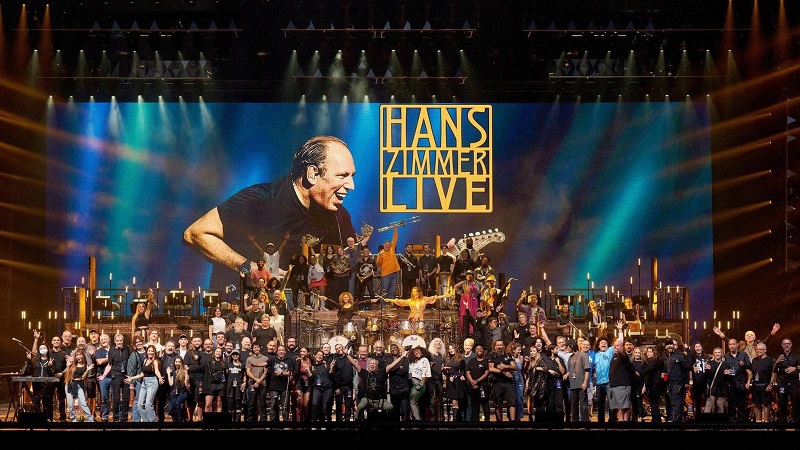
Perhaps this is part of something larger happening in music today. Joe Hisaishi has become almost inseparable from the concert performance of his own film music. Hans Zimmer has transformed the composer into a touring performer and made orchestral film music part of popular concert culture.
Now, perhaps, Malaysia is beginning to see its own composers occupy that space.
And there could hardly have been a more fitting place for it to happen than Istana Budaya.
Returning to a Theatre With New Breath
We arrived after a busy day, our little red Myvi being gently directed into its parking spot by the ushers.
It was a small, ordinary Malaysian moment before what was to become a rather extraordinary musical evening.
Inside, Istana Budaya felt grand again.
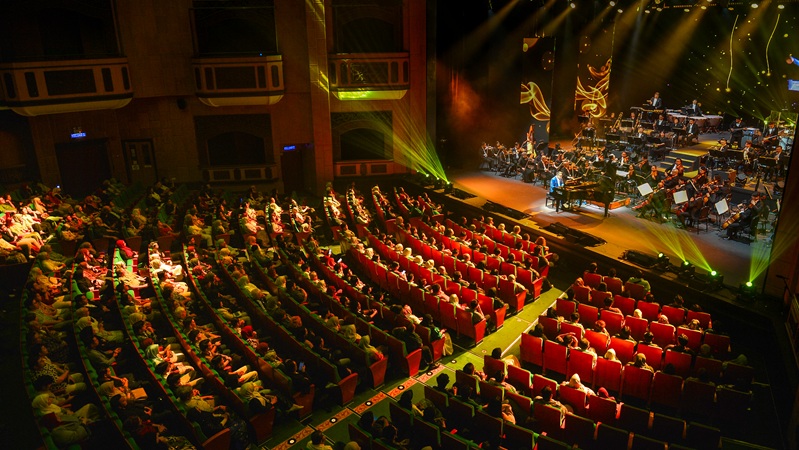
After two years of painting, repairing and resetting a new roof, the theatre was once again welcoming audiences. The large lobby seemed to prepare us for the scale of what was waiting inside. Its grand staircase, with its almost Cinderella-like theatricality, gave us the sense that we were walking into something more formidable than an ordinary concert.
The stage confirmed it.
The National Symphony Orchestra filled the space.
And for a moment, it was difficult not to think about how much had changed. A building had been closed, restored and reopened. A composer who had spent a career standing behind performers was now standing in front of an audience.
Everything seemed to be beginning again.
A Composer Thinking in Pictures
The opening music immediately set the scale.
It had the sweep of a symphonic poem, moving beyond the conventions of a conventional pop arrangement into something cinematic and expansive. I found myself thinking about A.R. Rahman, and about the career paths of John Williams and Hans Zimmer, composers who have made orchestral music feel completely at home in popular culture.
There was something similar in Suwito’s instinct.
He seemed to be thinking not simply in songs, but in pictures.
The orchestra could create atmosphere, tension, colour and movement. Music could suggest a landscape before a single word was sung.
Then came “Sabar Menanti,” dedicated to his father.
The grandness softened.
Suddenly, behind the orchestra and the concert hall was a son remembering his father.
It was one of those moments when the scale of an orchestra becomes almost irrelevant. A single dedication can bring a very large room very close.
When “Gemilang” Put on a New Coat
Then Syamel appeared.
And suddenly, “Gemilang” sounded rather different.
Suwito wrote the song more than a two decades ago for Malaysia’s first Malaysian Idol winner, Jaclyn Victor. Many Malaysians have heard it enough times for its identity to feel fixed.
But Suwito was having none of that.
Electric guitar, bass and drums gave the song a more muscular, rock-driven character. Syamel approached it with something closer to a jazz singer’s sensibility, allowing the melody to move differently from the version that lives in our collective memory.
Suwito had jazzified Gemilang.
And perhaps that is one of the privileges of being a composer looking back at his own work.
You do not have to preserve it.
You can disturb it.
You can discover another personality hiding inside something everyone already knows.
Voices From the Malaysia We Hear Today
The presence of Ernie Zakri, Syamel and Shiha Zikir gave the evening another dimension.
These are not merely young singers brought in to perform older songs. They belong to the contemporary Malaysian pop culture that exists now, shaped by television, streaming, social media and an audience whose musical tastes cross boundaries almost effortlessly.
Ernie brings an extraordinary vocal presence. Syamel has developed his own recognisable place within contemporary Malaysian pop. Shiha, too, carries the energy of a performer who belongs to today’s entertainment landscape.
Placed alongside Suwito and a symphony orchestra, they became something more than individual performers.
They became a bridge.
A bridge between the Malaysian pop music of Suwito’s generation and the audience consuming music today.
And perhaps this is where a new form of Malaysian modern classical pop could begin to take shape.
Not classical music dressed up as pop.
Not pop music with an orchestra placed behind it.
Something in between.
Something that allows the composer, the orchestra and the contemporary pop artist to influence one another.
“Bukan Cinta Biasa” Belongs to Another Memory
Then came “Bukan Cinta Biasa.”
Some songs are so completely associated with a singer that the two become almost inseparable.
For Malaysians, this is one of those songs.
We hear the title and think of Siti Nurhaliza.
But tonight, Siti was not the one in the spotlight.
Suwito was.
The song was played instrumentally, and somewhere in the theatre the audience began to sing quietly.
It was not a formal singalong. Nobody needed to tell us what to do.
We simply knew the melody.
For me, this remains perhaps one of Suwito’s most endearing creations. Hearing it opened out into the orchestra was a pleasure to the ears. A melody that had been so closely associated with one voice suddenly seemed to belong to the entire room.
There was something cinematic about it too. At moments, I found myself thinking of the emotional spaciousness of Joe Hisaishi, or even the sweeping intimacy of Morricone.
It was familiar.
Yet somehow new.
The Ghost of the 1970s
“Bila Larut Malam” took us somewhere else again.
The trumpet gave the opening a smoky jazz quality, and when it eventually took the main melody, the sound of another era suddenly appeared.
The Malay melodic language of the 1970s came through.
But so did something more cinematic.
There was a hint of that James Bond-era soundtrack swagger: brass, rhythm, sophistication and a certain theatrical confidence.
It was almost as though two musical memories had collided.
The Malay popular song was still there, but Suwito had placed it inside another cinematic universe.
That seems to be something innate in his musical language.
He hears possibilities.
Ernie Zakri and “Persis Kartarsis”
Later, Ernie Zakri brought her voice to “Persis Kartarsis”, this time in an orchestral treatment infused with the energy of EDM.
It was an interesting contrast.
The orchestra, with all its history and physical grandeur, was suddenly being asked to inhabit a contemporary electronic sensibility.
Yet this did not feel like a gimmick.
Instead, it demonstrated how naturally the boundaries between musical worlds are beginning to blur.
The orchestra can carry pop.
Pop can carry orchestral writing.
EDM can sit beside strings and brass.
And a singer like Ernie Zakri can move through all of it.
Perhaps this is what modern classical pop actually sounds like when we stop worrying about what category it belongs to.
Three Voices, One Stage
The evening eventually came to its close with Ernie Zakri, Syamel and Shiha Zikir sharing the stage as a trio.
It was a fitting image to leave us with.
Three voices belonging to the Malaysia of today.
Behind them, an orchestra representing a much longer musical tradition.
And at the centre, Aubrey Suwito.
The composer who had spent years helping other artists find their sound was now listening to a new generation interpret his music.
There was something quietly hopeful about that.
Music does not really move forward by replacing one generation with another.
It moves forward when one generation hands something over.
Perhaps that is what we were witnessing.
Memori Tercipta
The concert closed with “Memori Tercipta.”
The title felt almost too perfect.
Because the evening had been about memories.
Songs we had heard before.
Voices we already knew.
A composer whose work has been woven into Malaysian popular culture for years.
A theatre that had been closed for two years and was now alive again.
And an audience remembering melodies almost without being asked.
As we walked back through the lobby towards our little red Myvi, I found myself thinking about the curious journey of a song.
We often remember the singer.
We remember where we heard it.
We remember who we were when it became part of our lives.
But behind that memory is usually someone who sat quietly at a piano, at a desk or in a studio and imagined the music before anyone else could hear it.
For much of his career, that person was Aubrey Suwito.
Tonight, we finally saw him step into the light.
And perhaps that is the most interesting thing about this new chapter.
The composer does not always have to remain behind the artist.
Sometimes, the composer can become the artist.
And when that happens alongside a symphony orchestra and a new generation of Malaysian voices, something rather promising begins to emerge.
Not quite classical.
Not quite pop.
But unmistakably Malaysian.
And very much alive.