Learning the Art of Live Sound: My First 10 Sessions on the Yamaha DM7
I never thought I’d one day find myself behind a digital mixing console, responsible for shaping the sound of a live show. Yet, beginning mid-2025, I decided to take on a new challenge: shadowing a sound mixer for ten live music events. What started as curiosity quickly became an eye-opening journey into the nerve-wracking world of live sound engineering.
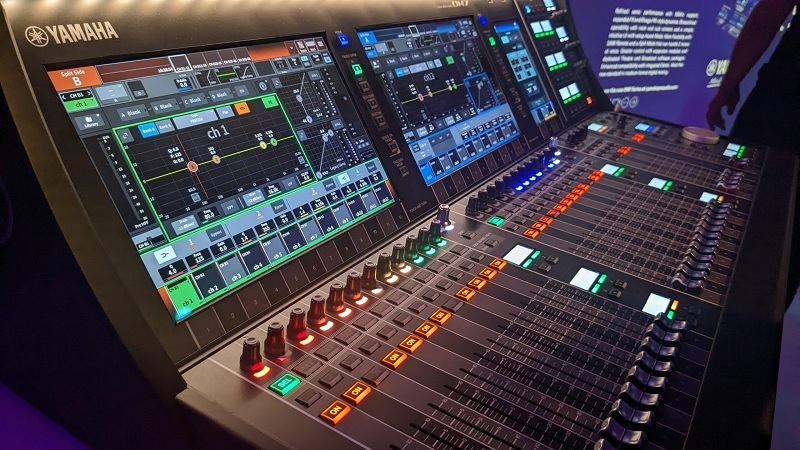
Armed with what I’ve always believed to be a good pair of ears—attuned to tone, texture, and rhythm—I was told I might be the right person for this. Still, the first time I stood before Yamaha’s DM7 digital console, it was intimidating. Hundreds of glowing buttons and faders blinked at me like the cockpit of an aircraft.
I realised I wasn’t just learning mixing—I was training on one of the most advanced live consoles in Malaysia’s market. Malaysia’s rental houses have already begun adding DM7 units to their fleets, signalling this model’s growing presence in the region’s live-sound infrastructure.

That fact changed everything for me: practicing on a console other engineers are using means this isn’t just a hobby—it’s preparation for professional work. It gave me hands-on insight into a system built for large-venue live music, broadcast and touring.
In many of these sessions, I was under the guidance of John O.
John O, best known as the former vocalist of Paperplane Pursuit, one of Malaysia’s pop bands, has a calm precision that’s infectious. Watching him work the console was like watching a musician conduct an invisible orchestra—decisive, intuitive, and always listening beyond the obvious.
Relevant: DM7 Series Training Video with Yamaha Global. For YouTube video, click here.
Under John O’s guidance, I began to see how the DM7 becomes the heart of a live production: 120+ input channels, 48 mix buses, high-quality plug-in modules, routing flexibility—and the kind of precision a 900-person audience demands.
Together, we began each session with the same ritual: flipping switches to power up microphones, monitors, and the console itself. The hum of readiness filled the air as we made our way to the console, neatly tucked at the back of a room that would soon host up to 900 people.
The production crew worked like clockwork—two high-tech cameras capturing 4K footage for streaming, the lighting team adjusting color and intensity, and me, nervously checking each input channel.

When it came time for my first real test—mixing a full live event with four vocalists, a band, and hosts—I realized how much attention live mixing demands. It’s not just about volume and balance; it’s about anticipation. I was so focused on technical settings that I missed a few visual cues. Feedback later from John and the team? “Remember to look at the stage more often.” They were right. Watching the musicians helped me sense what they wanted—like the electric guitarist, who, by the fourth chorus, craved a bit more power to lift the atmosphere.
With minimal rehearsal time—and a late drummer—I had to learn on the fly. I missed the first cymbal crash and once forgot to bring up the welcoming music fast enough during a news segment. But each slip came with a lesson.

By the end of my tenth session, I’d discovered something invaluable: the art of dynamics. Creating a welcoming atmosphere isn’t just technical; it’s emotional. A balance of acoustic warmth, electric texture, and keyboard harmony can transform a sound check into an experience.
The day I finally heard every mic, every instrument polished through the Yamaha DM7, I smiled. It was a small victory, but a powerful one. For the first time, I wasn’t just listening to music—I was shaping it.
As the year draws to a close, Monica plans to continue her journey behind the console. Already scheduled for three more live mixing sessions before the end of 2025, she shows no sign of slowing down.