
Why Juilliard Still Matters: Two Violin Students on Choosing Music Education with Purpose
In an era where music careers are increasingly self-directed and digital-first, the decision to pursue formal conservatory training remains deeply personal. For two violin students at the Juilliard School, the choice reflects not just ambition, but a clear sense of direction.
From Small-Town Dream to Global Stage
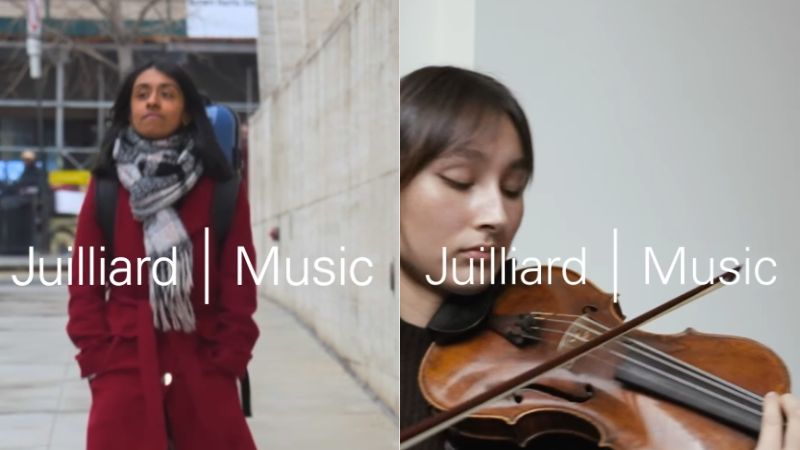
For violin student Maya Kilburn, Juilliard represents both artistic and personal transformation.
“[New York is] fertile ground for so many different kinds of art, for so many different kinds of people from all over the world,” she says.
Having turned her small-town dream into a reality, Kilburn now calls New York City home. The city itself becomes part of her education, offering a constant exchange of culture, perspective, and inspiration that extends far beyond the practice room.

Curating a Personal Path in Music
For fellow violinist Vibha Janakiraman, the experience is defined by autonomy and immersion.
“At Juilliard, I’ve had so much freedom to curate exactly the kind of college experience I’ve wanted.”
Being surrounded by art every day has shaped not only her musicianship, but also her identity. For Janakiraman, Juilliard is not just about training, it’s about taking ownership of her education and defining a path that is uniquely hers.
Why It Still Works
These two perspectives highlight what continues to make Juilliard relevant. It is not simply the prestige, but the environment. One that combines structure with freedom, and tradition with individual exploration.
In a rapidly evolving industry, where alternative routes are more accessible than ever, institutions like Juilliard remain valuable not as a single pathway, but as a space where young artists can sharpen their voice, build resilience, and step confidently into a professional future.
In a world increasingly shaped by short-term skills and quick returns, music education remains a rare path that not only sustains a lifelong career with financial stability and social standing, but more importantly preserves the enduring discipline and artistry of learning an instrument.