
Tomorrowland Comes to Asia: Why Bangkok Secured a Five-Year Deal
Thailand’s hosting of the world’s largest EDM festival signals Southeast Asia’s rising soft power — uniting ASEAN through music, culture, and investment opportunities.
Thailand’s hosting of the world’s largest EDM festival signals Southeast Asia’s rising soft power — uniting ASEAN through music, culture, and investment opportunities.
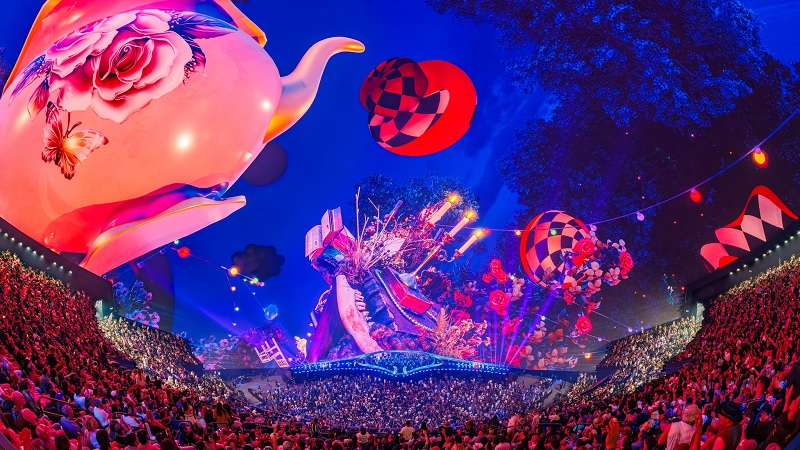
In December 2026, the world’s most iconic electronic dance music (EDM) festival will make its long-awaited Asian debut. Tomorrowland, born in Boom, Belgium nearly two decades ago, has officially announced Bangkok as its host city for the next five years. For Thailand, this is not just another international booking. It is a strategic cultural coup — one that signals the country’s growing ambitions to position itself as Southeast Asia’s premier hub for music tourism and global festivals.
This partnership, extending through 2030, raises important questions: Why Asia, why now, and why Thailand? And what might this mean for the future of the region’s music industry, its youth culture, and its standing on the global festival map?

Why Tomorrowland Took Its Time Coming to Asia
For years, speculation has swirled about when Tomorrowland might expand beyond Europe and its satellite editions in North and South America. Asia, with its vast population and rising middle class, has often been cited as the “next frontier.” Yet the move did not happen overnight.
Several factors contributed to the timing. Firstly, Asia’s youth demographics — with nearly 700 million people under the age of 35 in Southeast Asia alone — have matured into a festival-ready audience. They are digital natives, already immersed in electronic music through streaming, TikTok trends, and international DJ tours.

Secondly, regional infrastructure has caught up. In the past decade, cities like Bangkok, Singapore, and Jakarta have become highly connected travel hubs. Budget airlines, new airports, and expanding hotel capacities now make large-scale tourism possible. The region’s appetite for music-driven experiences has also been tested and proven by festivals like Djakarta Warehouse Project (DWP), Ultra Singapore, and Wonderfruit.
In short, the conditions Tomorrowland needed — connectivity, spending power, and audience readiness — are finally in place.
Why Thailand, Why Bangkok
So why Thailand? Why not Singapore, with its global profile, or Indonesia, with its massive population? The answer lies in a combination of infrastructure, politics, and cultural branding.
Bangkok offers world-class airports, over 120,000 hotel rooms, and a thriving tourism economy that welcomed nearly 40 million international visitors annually before the pandemic. Its reputation as a party capital is well established, with nightlife that ranges from rooftop bars to underground clubs.

But beyond logistics, the Thai government has been vocal about its push to diversify the economy through “soft power” strategies. Music, art, and creative industries are being framed as exportable assets — tools to elevate Thailand’s image on the world stage. Hosting Tomorrowland fits neatly into that narrative, allowing Thailand to project itself as a cultural hub rather than just a leisure destination.
It is worth noting that negotiations for such deals rarely happen by accident. Thailand’s tourism and cultural agencies have actively courted international events, from film productions to global conventions. Securing Tomorrowland is evidence of a deliberate strategy to anchor the country as Asia’s festival capital.
What Tomorrowland Brings — And Why It Matters
Tomorrowland is not just another EDM event. It is, arguably, the most recognizable brand in the global festival circuit. Its reputation rests not only on lineups of superstar DJs like Martin Garrix, Armin van Buuren, and Tiësto, but also on its signature stage design — elaborate fantasy worlds built with almost theatrical precision.

For many fans, Tomorrowland is less about music alone and more about the experience: the costumes, the fireworks, the mythical stage sets, and the sense of community forged across borders. Bringing that energy to Bangkok offers Southeast Asian audiences something few have experienced firsthand — the spectacle of a “destination festival” that people fly halfway around the world to attend.
For Thailand, this translates into both soft power and hard economics. Early projections suggest the first edition in 2026 could draw at least 50,000 attendees, with numbers likely to rise in subsequent years. If even half are international tourists, the knock-on effect for airlines, hotels, and local businesses could be immense. Beyond tourism, Tomorrowland’s presence may help boost Thailand’s creative industries by fostering collaborations between local artists and international names.

The Ripple Effect Across Southeast Asia
The impact of Tomorrowland Thailand will not stop at Bangkok’s borders. Neighboring countries are likely to benefit indirectly from increased regional tourism. Festival-goers might pair a Tomorrowland weekend with trips to Angkor Wat in Cambodia, the beaches of Vietnam, or the islands of Malaysia.
For regional festival organizers, Tomorrowland’s arrival could be both a challenge and an opportunity. On the one hand, its scale and brand power may overshadow smaller events. On the other, it could raise the region’s profile, creating spillover interest in homegrown festivals like Wonderfruit or Java Jazz.
If managed wisely, Tomorrowland could help establish Southeast Asia not just as a tour stop but as a global music destination in its own right.
A Word of Caution
Of course, big festivals also come with risks. Questions remain about sustainability, environmental impact, and crowd management. Local communities often worry about noise, safety, and cultural disruption.

Tomorrowland’s organizers will need to tread carefully, ensuring that the event is not perceived as an imported spectacle but as something that respects and celebrates Thai culture. Incorporating local art, cuisine, and traditions into the festival design will be key to making it feel authentic rather than imposed.
Equally, ticket pricing will be a delicate issue. While Tomorrowland is a premium brand, accessibility matters in a region where incomes vary widely. Striking the balance between exclusivity and inclusivity will be crucial for building long-term goodwill.
Asia’s Moment on the Global Stage
Tomorrowland’s five-year commitment to Bangkok is more than a music story. It is a sign of Asia’s shifting place in the global cultural economy. For decades, Asia was seen primarily as a market for international acts to tour through. Now it is becoming a home for world-class festivals.
This move positions Bangkok — and Southeast Asia more broadly — as a central player in the global live music map. It reflects the growing confidence of Asian governments, the rising power of its youth, and the appetite of international brands to plant long-term roots in the region.
As 2026 approaches, the anticipation will only grow. For fans, it is the promise of a once-in-a-lifetime experience. For Thailand, it is a chance to showcase its culture on a world stage. And for Asia, it may just mark the beginning of a new era — one where music, tourism, and cultural diplomacy intersect more powerfully than ever before.
Have you experienced a music festival before? What are your thoughts on Tomorrowland coming to Thailand?